
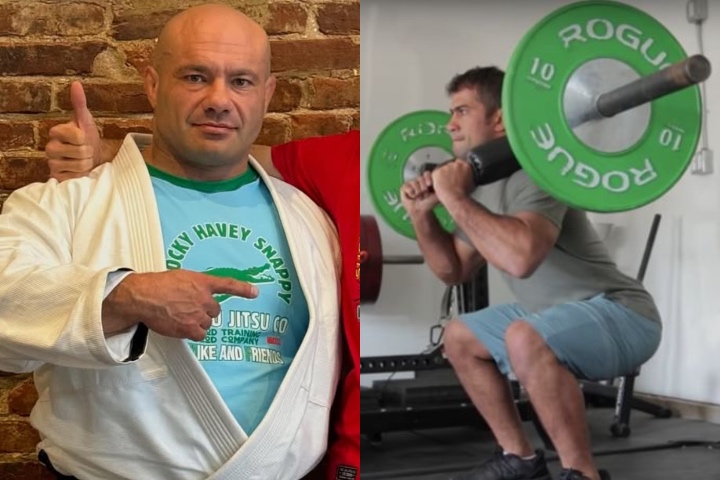
Dr. Mike Israetel recently explained that legs matter far less in Jiu-Jitsu than most people assume.
When Gordon Ryan said that his bench press max sits at 395 lbs for three reps at a bodyweight of 235 lbs, an unusually high number for a competitive grappler, Dr. Mike didn’t downplay the significance:
When someone with Gordon Ryan’s technique is able to have the force to bench press 400 lbs, that is so dangerous because you’re not getting out.
You’re not going to out technique him and he’s stronger than you. What do you do after that? I’m not sure.
It was Ryan’s comparatively weaker squat, though, that led to the more interesting point:
The legs are overrated in Jiu-Jitsu.
If you have strong enough legs to jump up a reasonable height into the air, sprint a few times, and walk up a flight of stairs, you probably have strong enough legs to do everything with your legs that you would need to happen with them in Jiu-Jitsu.
Bringing people in closer to you, pushing people away, your legs are kind of overqualified for that.
Where Dr. Mike places real emphasis is the upper body, given how much of Jiu-Jitsu relies on gripping, controlling, pulling, and pushing:
Your upper body’s ability to grip the gi, grip people’s forearms and shoulders without the gi, your ability to pull people in, your ability to push people away is huge and more important than what you could do with your legs.
Sloth Jiu-Jitsu: The Ultimate Guide for Calmly Beating Bigger, Younger Opponents
💥 What if slowing down was the fastest way to win?
💭 Tired of Getting Smashed by Younger, Stronger Grapplers?
It’s not your age. It’s your strategy.
If you’re a passionate grappler over 35 who’s sick of getting outpaced, outmuscled, or out-cardio’d by opponents half your age — this 120 page e-book was made for you.
🔓 Unlock the Power of Sloth Jiu-Jitsu:
Build Sustainable Strength—Without Wrecking Your Joints, Energy, or Jiu-Jitsu
Tired of waking up sore and burnt out after lifting?
Sloth Strength is a proven blueprint for grapplers over 35
who want to get stronger—without the pain, burnout, or injuries.
Developed from 25 years on the mats, this no-burnout approach is made
specifically for BJJ athletes in their 30s, 40s, and beyond.