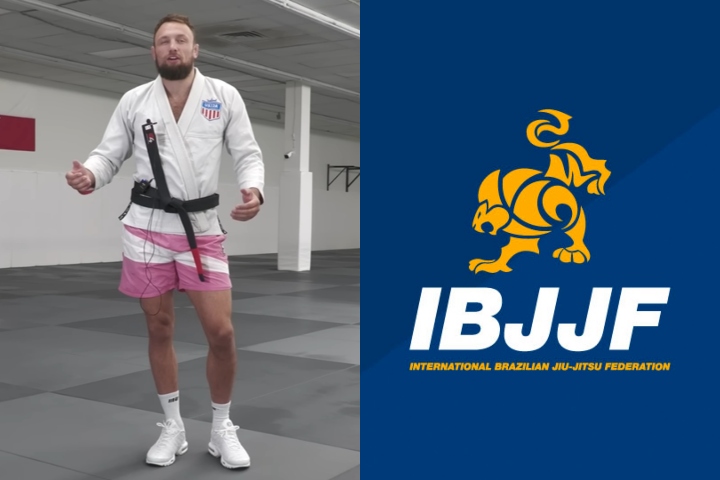
Craig Jones argues that IBJJF scoring misreads what control means in grappling.
In his Power Ride instructional, he says the system was built around positions assumed to be strong for ground and pound, yet those positions rarely produce finishes in modern MMA.
His main criticism is that side control, mount and back control ignore where an opponent’s movement comes from: the legs.
A bottom player who can plant their feet can bridge, hip escape and explode out, regardless of what the top player holds.
Jones points to Khabib Nurmagomedov as evidence, noting that he stays on top of the legs from half guard or closed guard, positions that score nothing in the IBJJF but give him stronger control:
If our point scoring system in the sport was built around ground and pound positions, then why are those positions so terrible in modern day MMA for ground and pound?
If the most dangerous part of an opponent’s body is his legs, why is that not the thing we focus on when we focus on control?
Khabib really doesn’t try to pass people’s guards. How often do you see Khabib in side control?
If we can control the opponent in such a way that he cannot move without conceding something else, that to me is what we should truly be aiming for when we talk about pinning our opponents.
He sees the same pattern among non-grapplers. Kelvin Gastelum, Jones notes:
Quite often lets people pass because from side control, he has a great ability to turtle away and shake people off.
Sloth Jiu-Jitsu: The Ultimate Guide for Calmly Beating Bigger, Younger Opponents
💥 What if slowing down was the fastest way to win?
💭 Tired of Getting Smashed by Younger, Stronger Grapplers?
It’s not your age. It’s your strategy.
If you’re a passionate grappler over 35 who’s sick of getting outpaced, outmuscled, or out-cardio’d by opponents half your age — this 120 page e-book was made for you.
🔓 Unlock the Power of Sloth Jiu-Jitsu:
Build Sustainable Strength—Without Wrecking Your Joints, Energy, or Jiu-Jitsu
Tired of waking up sore and burnt out after lifting?
Sloth Strength is a proven blueprint for grapplers over 35
who want to get stronger—without the pain, burnout, or injuries.
Developed from 25 years on the mats, this no-burnout approach is made
specifically for BJJ athletes in their 30s, 40s, and beyond.